

How to find potential B2B customers? Company data and buying signals
When searching for potential B2B customers, the problem is usually not a lack of companies. The real challenge is identifying which companies actually match your ideal customer profile and which ones may find your offer relevant right now.
There are more than 200K companies operating in Lithuania. You cannot speak to all of them, so the goal of active prospecting should not be to build the longest possible company list, but to identify potential customers as precisely as possible.
If you sell recruitment services, for example, a company whose headcount has increased over the past year is probably more interesting than a similarly sized company that is reducing its workforce. If you sell commercial vehicles, a potential customer might be a company whose fleet is approaching a likely renewal point. And if you sell business management software, companies experiencing rapid growth in both revenue and headcount may be particularly worth looking at.
In other words, instead of asking “Where can we find more potential customers?”, it is worth asking: “What data can help us identify companies that are most likely to find our offer relevant right now?”
Potential B2B customers can be identified by filtering companies based on their industry, size, financial metrics, number of employees, growth rate and other characteristics. This allows you to gradually narrow the entire market down to a much smaller and more sales-relevant segment of companies.
Start by defining what your potential customer looks like
Before searching for specific companies, it is worth defining what types of companies are actually potential customers for your business. Industry alone is usually not enough – company size, revenue, number of employees, financial health, geographic location and other characteristics relevant to your offering may all matter.
If you already have a substantial number of B2B customers, your existing customer base is a good place to start. Look at your best customers and identify what they have in common. Perhaps most of them operate in the same industry, are of a similar size, generate similar revenue or share certain financial characteristics.
Actual data about your best customers can help you build an ideal customer profile – a set of characteristics describing the types of companies for which your product or service is most likely to be relevant.
If you do not yet have enough existing customers to draw reliable conclusions, you can create an initial customer profile as a hypothesis: decide which industries, company sizes and levels of financial capacity are most likely to fit your product, then refine this hypothesis based on actual sales results.
The best results come from combining multiple filters
High revenue alone does not make a company a good potential customer. Likewise, a large number of employees does not necessarily indicate whether your offer is relevant to the company right now. A combination of several criteria can provide much more useful information.
Suppose you sell a CRM, ERP or another business management system and want to identify growing companies where increasing operational complexity could create a need for more efficient process management. An initial prospect selection could look like this:
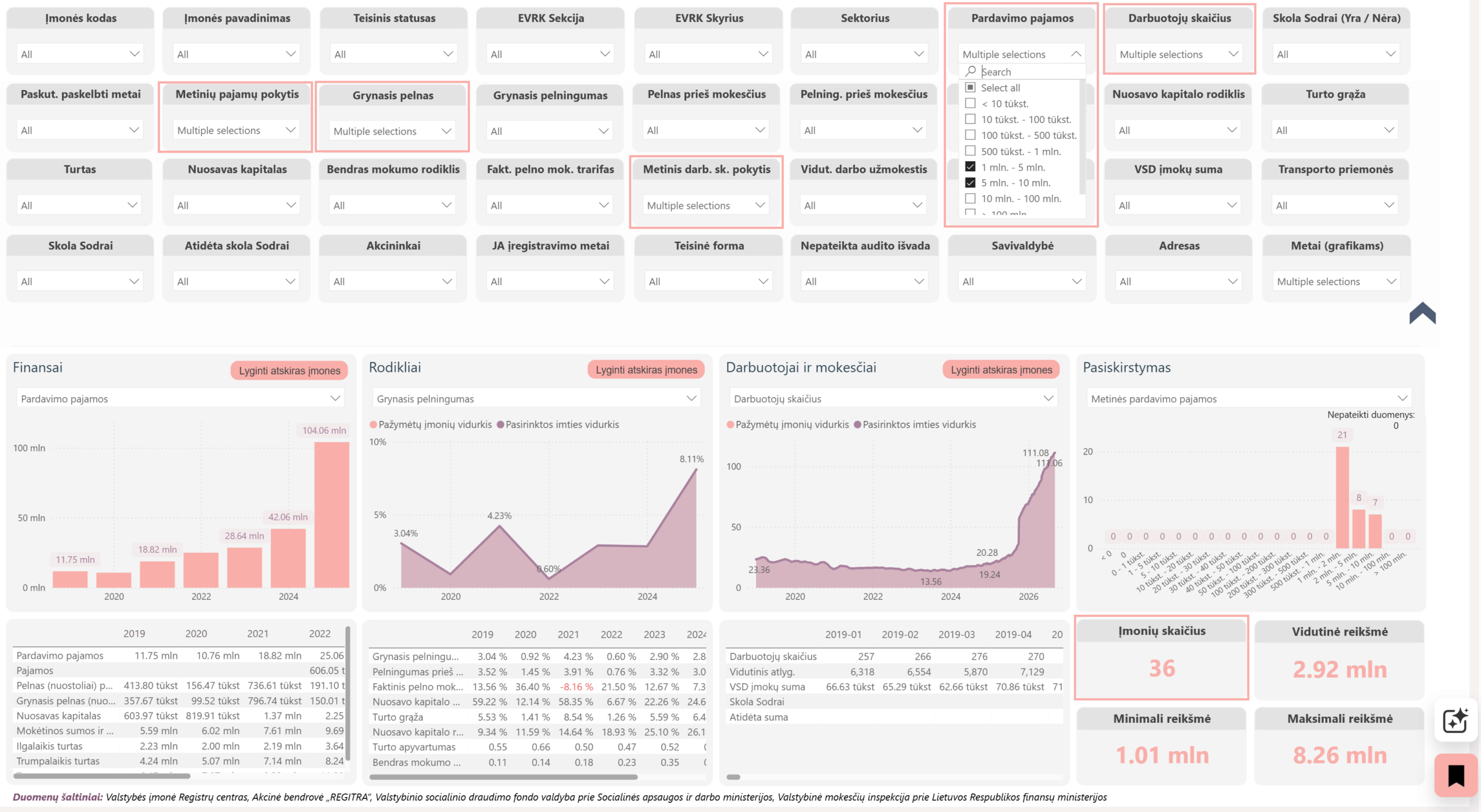
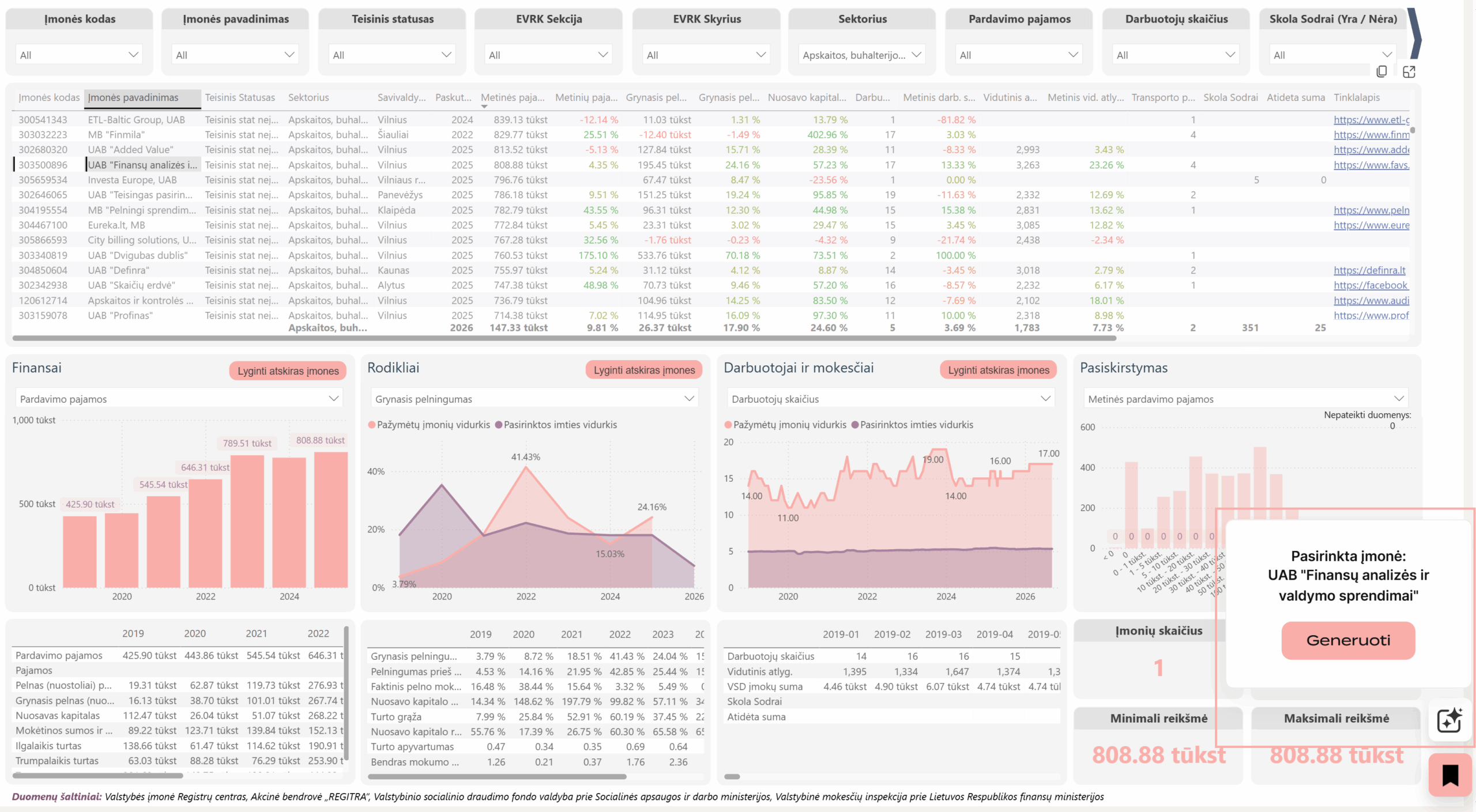
sales revenue of €1–10M + annual revenue growth > 10% + more than 20 employees + annual headcount growth > 5% + net profit > 0.
This combination of filters does not guarantee that every selected company needs your system. However, it helps identify companies experiencing changes that may be relevant to your offering. Growing revenue and headcount can indicate increasing business activity – more processes, customers, employees, documents and information to manage.
This is the principle behind PLY Insights company analytics – a tool for finding potential B2B customers, filtering companies and segmenting markets across Lithuania, Latvia and Estonia. Instead of reviewing a long list of companies one by one, you can combine multiple criteria in interactive dashboards and identify businesses that match your potential customer profile.
Companies can be filtered by industry, business activity, municipality, financial metrics – including sales revenue, profit, profitability, assets and equity – as well as number of employees, average salary, social security debt, number of vehicles and other criteria.
The more meaningful criteria you combine, the more precisely you can narrow the overall market down to companies that match your potential customer profile.
To see how PLY Insights works in practice and how filters can be used to identify companies, watch this short video: What Is PLY Insights and how can It help your business.
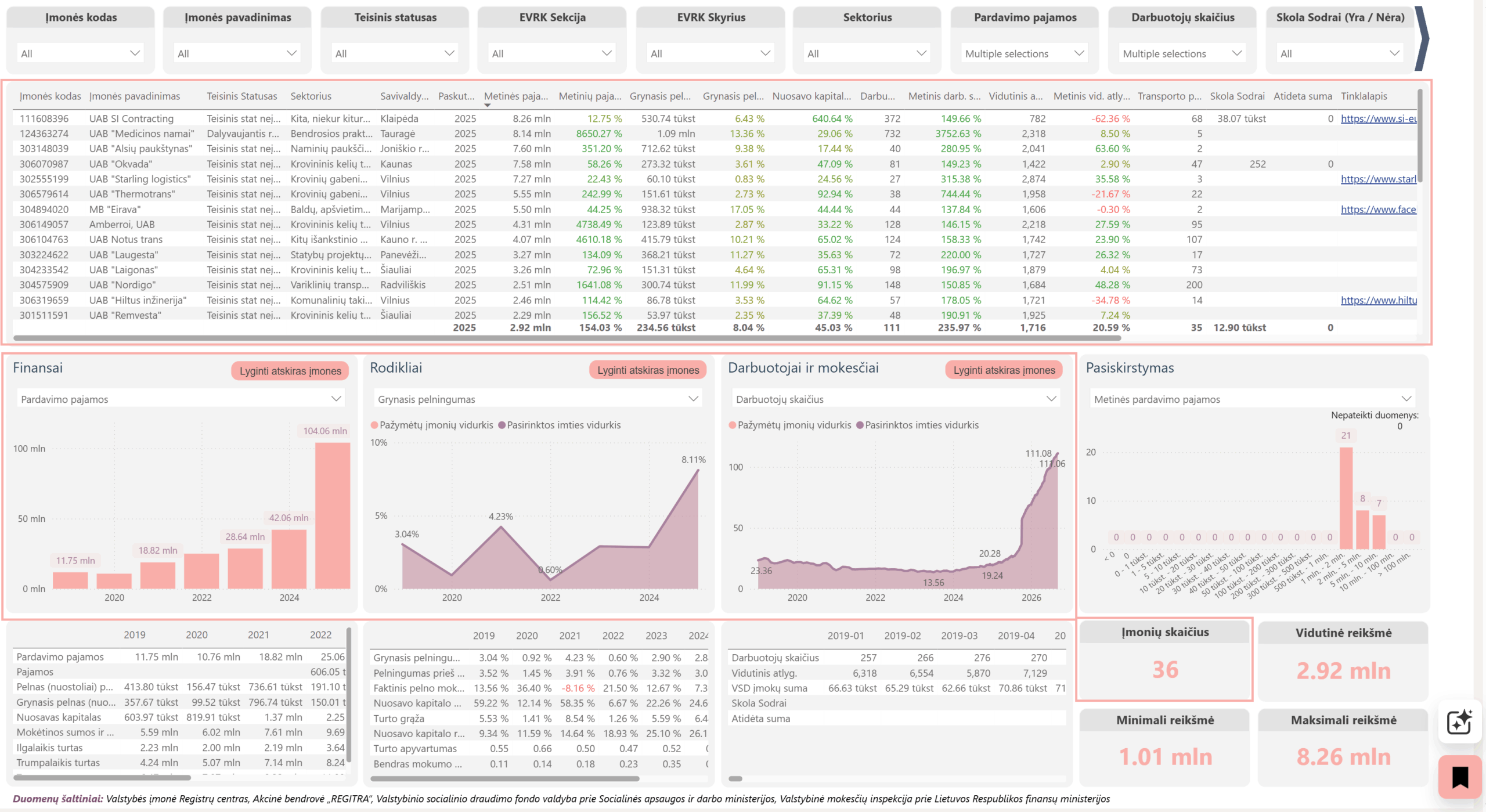
Once filters are applied, the entire PLY Insights report is automatically recalculated based on the selected criteria. The table displays only the companies that match them, while the charts show financial, employee and other metrics specifically for that segment. This makes it possible to see in one place how many companies match your potential customer profile, which companies they are and what characteristics define the selected market segment.
PLY Insights can therefore be used not only for market analysis, but also to build a specific list of potential B2B customers. With a paid plan, the filtered company list can be exported and used in further sales activities.
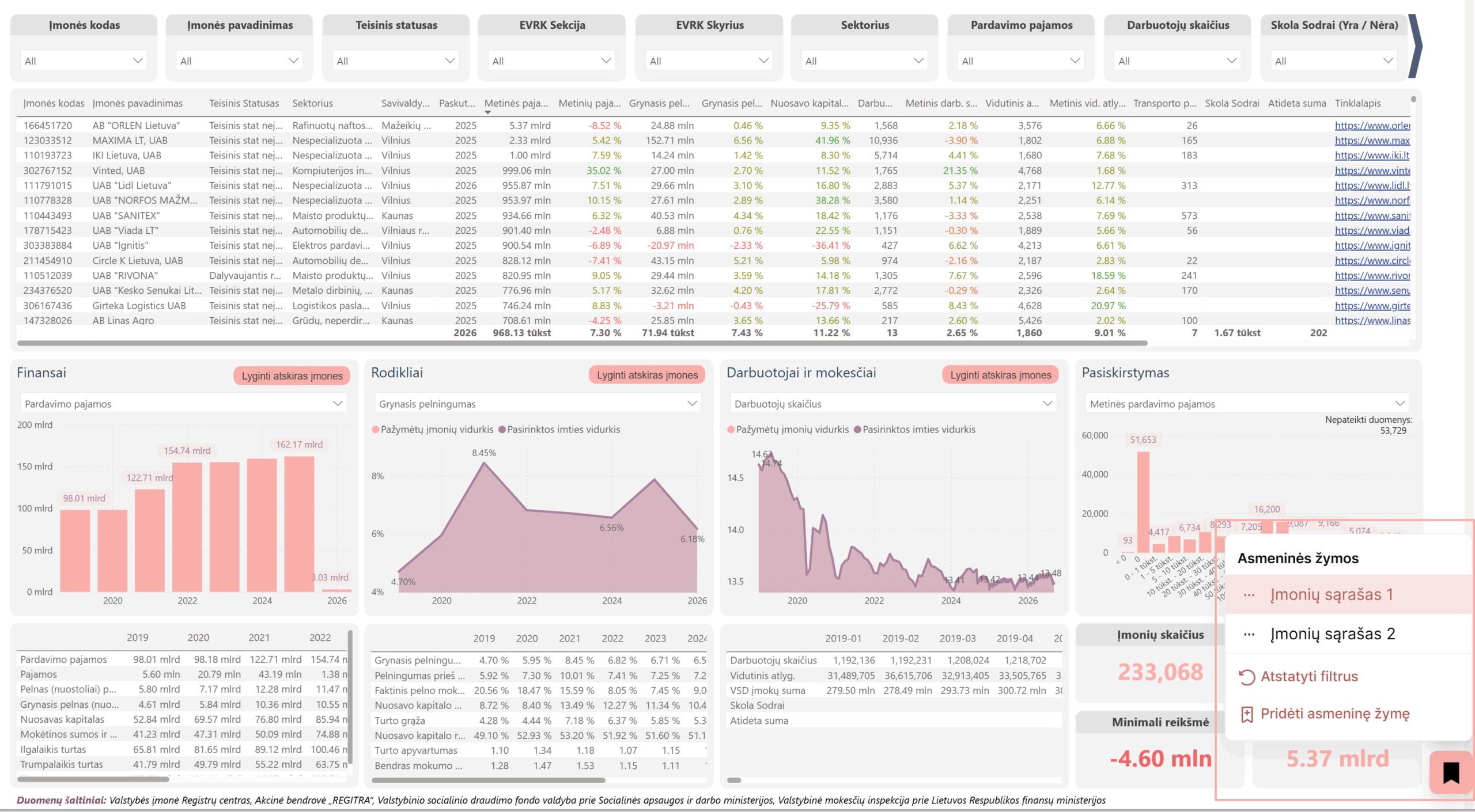
Filter combinations can also be saved and quickly revisited later. This is particularly useful if you work with several potential customer profiles – for example, for different services, industries or sales teams.
Look not only for the right companies, but also for buying signals
When searching for potential B2B customers, it is worth considering not only what a company looks like today, but also what is changing within it.
It is useful to distinguish between two things:
- Fit – does the company match your ideal customer profile based on its industry, size, financial metrics and other criteria?
- Buying signal – are there changes taking place within the company that could make your product or service more relevant right now?
For example, a company with 100 employees may fit your target audience perfectly. But if its headcount has increased by 30% over the past year, that change may represent an additional signal for providers of HR services, employee training, IT solutions, workplace equipment or other business services.
This is why change can sometimes be more informative than absolute size. Consider two companies. The first generates €20M in revenue and employs 200 people, but the business has barely grown over the past few years. The second generates €5M in revenue and employs 60 people, but its revenue has grown by 35% and its headcount by 25% over the past year.
Based on this data alone, we cannot say which company will become a customer. However, for many B2B products, the second company may represent a more interesting sales opportunity because rapid growth often creates a need for new processes, employees, infrastructure or other solutions.
PLY Insights company analytics allows you to analyze and filter companies based not only on absolute metrics, but also on changes in those metrics. For example, potential customers can be selected not only by sales revenue or number of employees, but also by annual changes in these figures.
This makes it possible to look beyond companies that simply match a particular profile and identify growth or other change signals that may indicate when a specific company becomes more relevant for active B2B prospecting.
Vehicle data can also reveal potential demand
Revenue, profit and headcount are not always the best indicators of a potential customer’s needs. In some industries, data about the vehicles a company uses can provide a much more valuable signal.
This type of data is particularly useful for vehicle dealers and other companies providing transport-related services. Instead of looking only for businesses with a certain number of vehicles, you can also search for signs that their fleet may be approaching a renewal point.
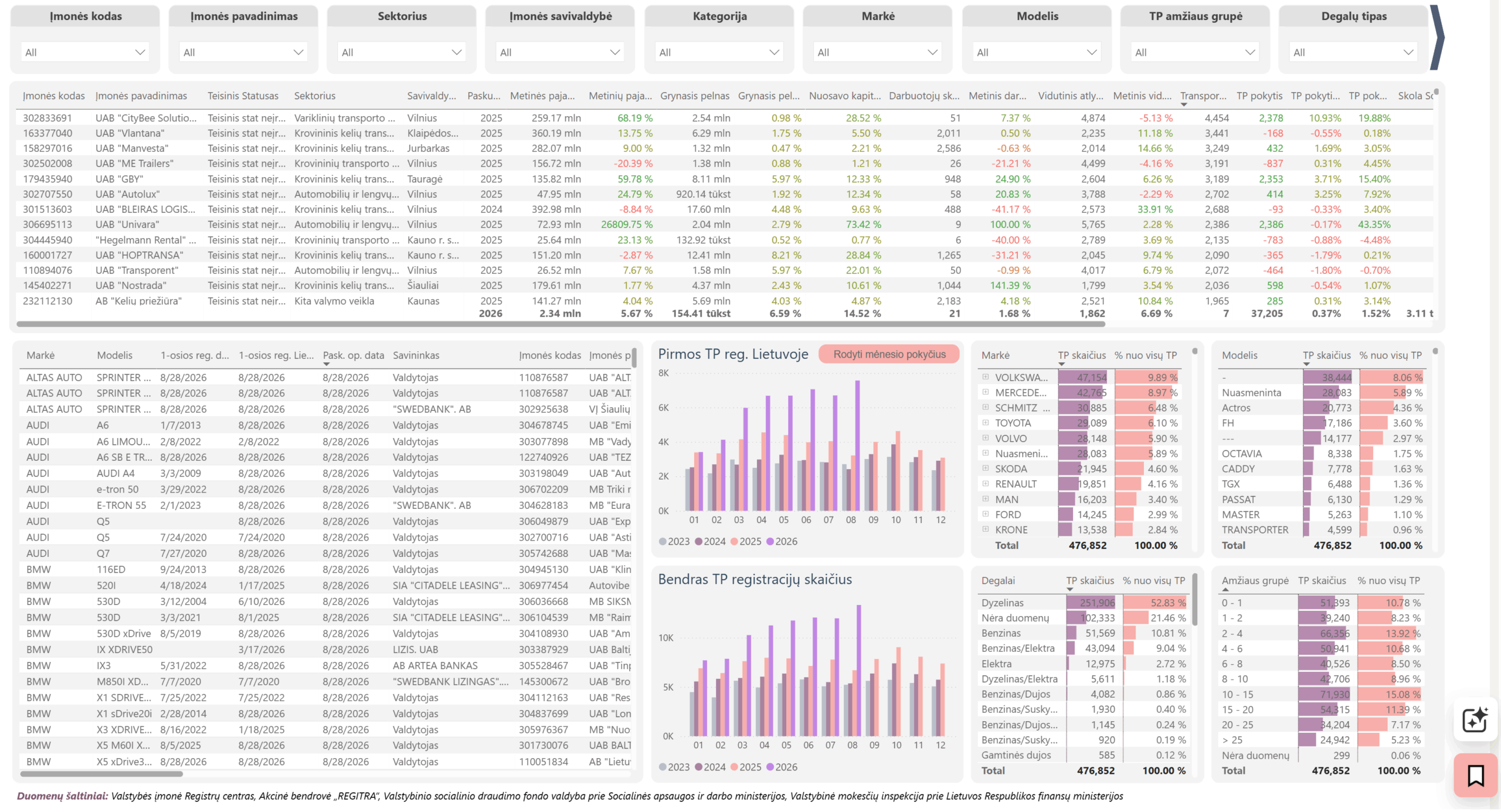
For this purpose, PLY Insights Lithuanian vehicle analytics can be used to filter vehicles by management rights, management duration, age group, brand, model, fuel type and other criteria.
For example, a vehicle dealer can select the management right “Valdytojas” to identify vehicles leased by companies. By additionally selecting a four-year management duration and a vehicle age of 4–5 years, it is possible to identify companies that have been using a vehicle under a leasing arrangement for approximately four years. This combination of filters may indicate that the leasing agreement is approaching its end and that the vehicle may soon be due for replacement.
For a vehicle dealer, this could be an appropriate time to start communicating with the company and offer a new vehicle before the company actively begins searching for a replacement for its current one.
This illustrates a broader principle of B2B prospecting: data can help answer not only “Who could be my customer?”, but also “When should I contact them?”
For a practical example of how vehicle data can be used to identify potential customers, watch the PLY Insights video: Effective customer selection for vehicle rental and sales companies.
Public procurement can also reveal where demand exists
A different approach to finding potential customers applies when your products or services are purchased through public procurement.
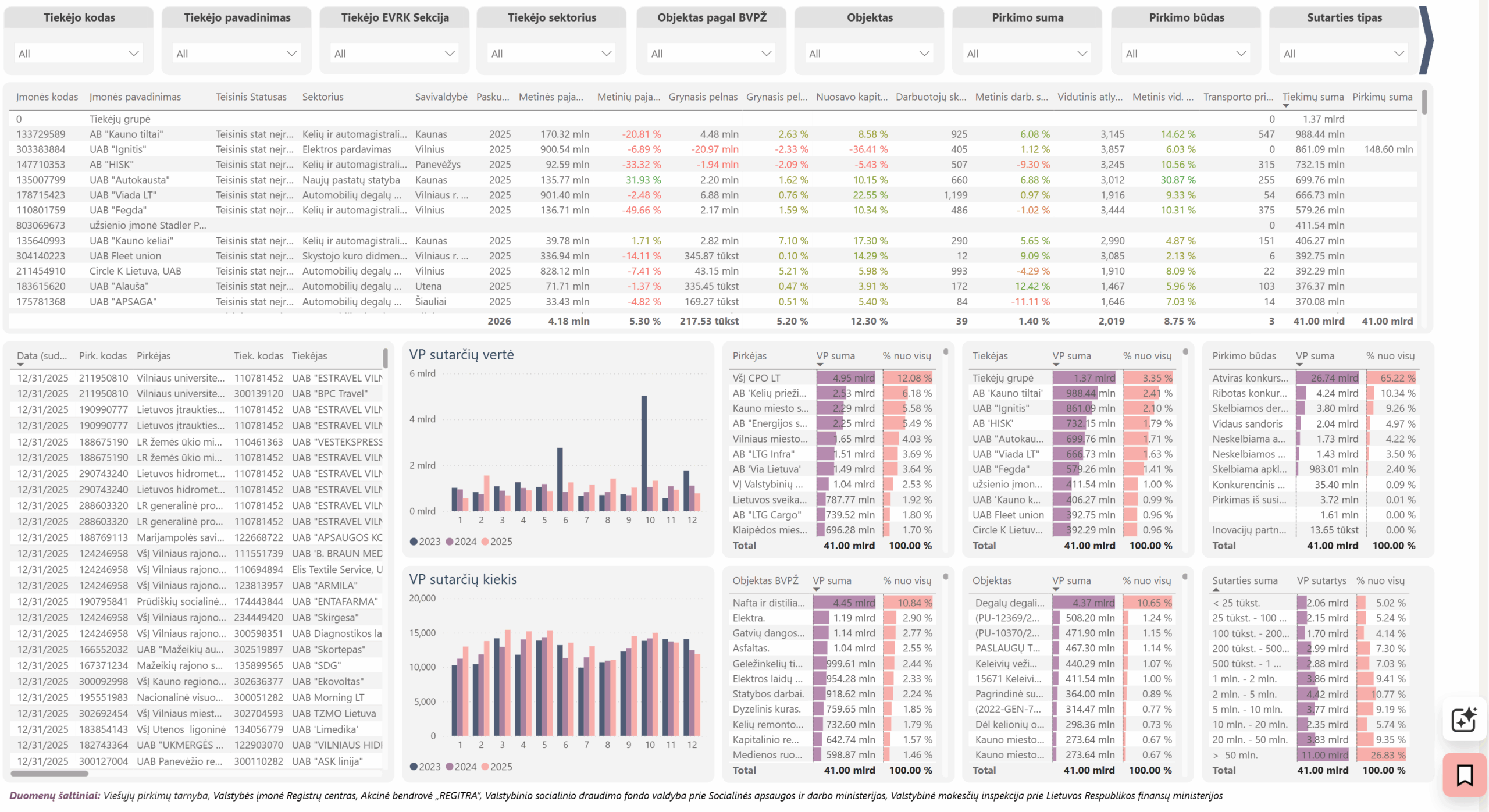
Historical public procurement data can help answer several practical sales questions. Which organizations regularly purchase the services you provide? What is the typical value of these purchases? Which suppliers win the contracts? Which tenders are your competitors participating in?
PLY Insights public procurement analytics allows procurement data to be analyzed by buyer, supplier, sector, procurement object, value, procurement method and other categories. This means public procurement data can be viewed not merely as a record of completed tenders, but also as a source of market intelligence and potential customer identification.
For example, if you sell IT services, you can analyze which organizations have previously purchased similar services, what the contract values were and which suppliers participated. This information does not tell you who will announce the next tender or when, but it can help you better understand potential buyers, typical contract sizes and the competitive landscape.
Public procurement data can also be useful for competitor analysis. By seeing which buyers other market participants work with and which procurement categories they are active in, you may discover organizations or market segments that were previously missing from your potential customer list.
The same data can also provide a clearer picture of the potential size of the market itself. You can assess how many relevant procurements take place, their values, which buyers conduct them and which suppliers are most active. This can help you decide how much sales effort is worth allocating to a particular public-sector segment.
Once you have selected potential customers, prepare for first contact
Company data can help you decide not only who to contact, but also how to prepare for that contact.
If a company was added to your potential customer list because its headcount is growing rapidly, the conversation might focus on challenges associated with that growth. If the signal was an approaching fleet renewal point, the context for your communication will be entirely different.
Before making first contact, it is therefore worth understanding why a particular company made it onto your potential customer list and learning more about its current situation.
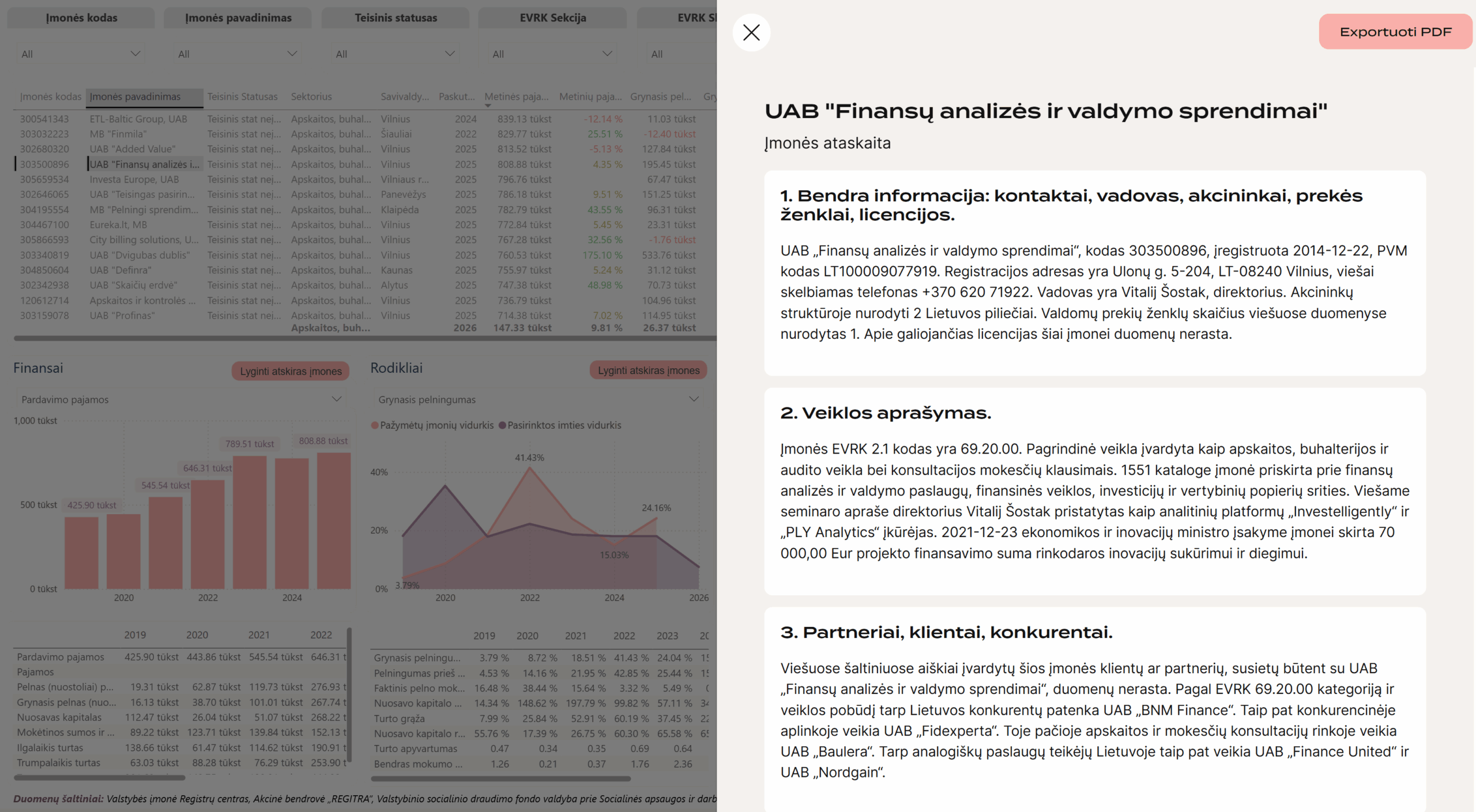
When you select a specific company in PLY Insights, you can view a detailed AI-generated company overview that brings together key information about the company’s activities, financial metrics, partners and competitors, credit risk and other aspects.
This information can help you move from a generic cold pitch towards communication that takes into account the company’s specific situation and the signal that led you to identify it as a potential customer in the first place.
Finding potential customers starts with a question, not a company list
The B2B prospecting process can be summarised in a few steps:
- Define your potential customer profile.
- Use relevant filters to identify companies that match it.
- Look for buying or change signals.
- Evaluate the most promising companies and prepare for first contact.
- Use your selected company list in active sales outreach.
The key point is that company filtering is not simply a way to make a list shorter. Its purpose is to help sales teams spend more time on companies that best match their potential customer profile and for which the offer may be particularly relevant right now.
For one business, the relevant signal might come from a company’s financial metrics and how they are changing. For another, it might be headcount growth. For a third, it could be the company’s vehicle fleet and an approaching renewal point. When selling to the public sector, procurement history, buyers, suppliers and contract values may provide the most useful signals.
The better you understand which data points can indicate potential demand for your product or service, the less time you need to spend approaching potential customers at random.
PLY Insights company, vehicle and public procurement analytics make it possible to apply these principles in practice – from defining a potential customer profile to identifying specific companies and potential buying signals.


